
“Love yourself” is simple advice that can transform your entire life—but learning to follow it takes patience and practice. Loving yourself is about valuing your worth, honoring your needs, and treating yourself with the same compassion you readily offer to others. It’s about recognizing that you are deserving of love, care, and happiness—not because of what you’ve achieved, but simply because you exist.
In a world full of pressures, comparisons, and expectations, loving yourself often requires unlearning years of self-criticism and replacing it with encouragement. When you love yourself, you set the tone for how others treat you, and you unlock the confidence to live authentically and bravely.
Words can be powerful reminders to nurture this relationship with yourself. Whether you’re searching for motivation, healing thoughts, or confidence boosters, these carefully crafted quotes serve as daily encouragement to choose yourself, every day. This collection of 50 quotes is here to inspire and strengthen your self-love journey.
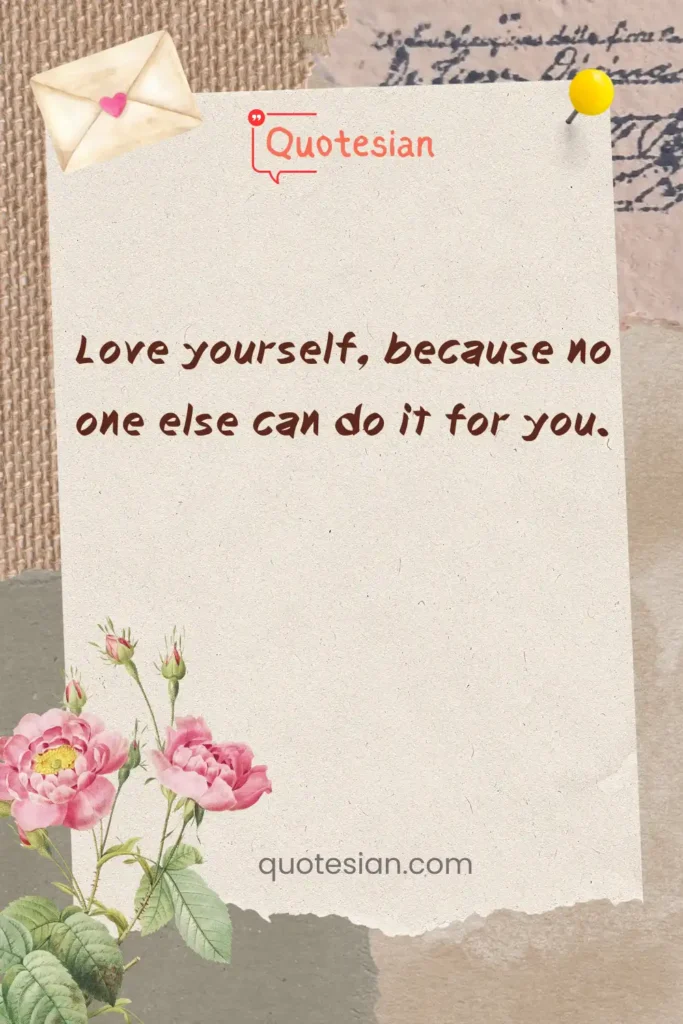
Love yourself, because no one else can do it for you.
This line emphasizes personal responsibility in building self-worth. While others can support, encourage, and care for you, they cannot create your inner sense of value. Self-love is something that must come from within. It is shaped by how you speak to yourself, the boundaries you set, and the standards you choose to uphold.
Depending entirely on others for validation can leave you feeling uncertain or fragile. External approval may change, but your relationship with yourself remains constant. When you cultivate self-respect and compassion, you create stability that does not rely on outside opinions.
Loving yourself does not mean rejecting help or connection. It means understanding that true confidence and peace begin internally. Others can add to your happiness, but they cannot replace your responsibility to care for your own well-being.
Ultimately, this message reminds you that self-love is essential. You are the one who lives with your thoughts every day. By choosing to value yourself, you build a foundation of strength that supports every other relationship and experience in your life.
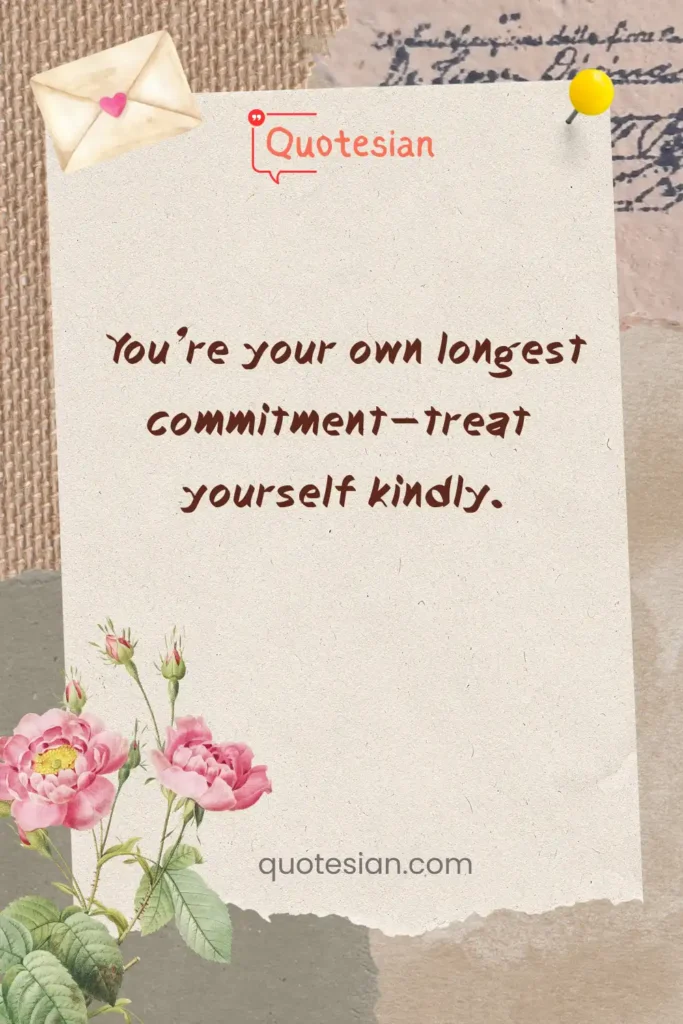
You’re your own longest commitment—treat yourself kindly.
This line highlights the lifelong relationship you have with yourself. Unlike any other bond, the connection you share with your own thoughts, emotions, and identity remains constant. From the beginning of your journey to its final chapter, you are the one person who will always be present.
Calling it your “longest commitment” emphasizes responsibility. Just as you would nurture a meaningful relationship with patience and care, you deserve the same from yourself. Kindness toward yourself shapes confidence, resilience, and emotional balance.
Treating yourself kindly does not mean ignoring mistakes or avoiding growth. It means responding to setbacks with understanding rather than harsh judgment. It involves setting boundaries, honoring your needs, and allowing space for rest and self-reflection.
Ultimately, this message reminds you that self-compassion is not optional—it is essential. When you choose to treat yourself with patience and respect, you strengthen the most important relationship you will ever have. That steady foundation influences every other connection and experience in your life.
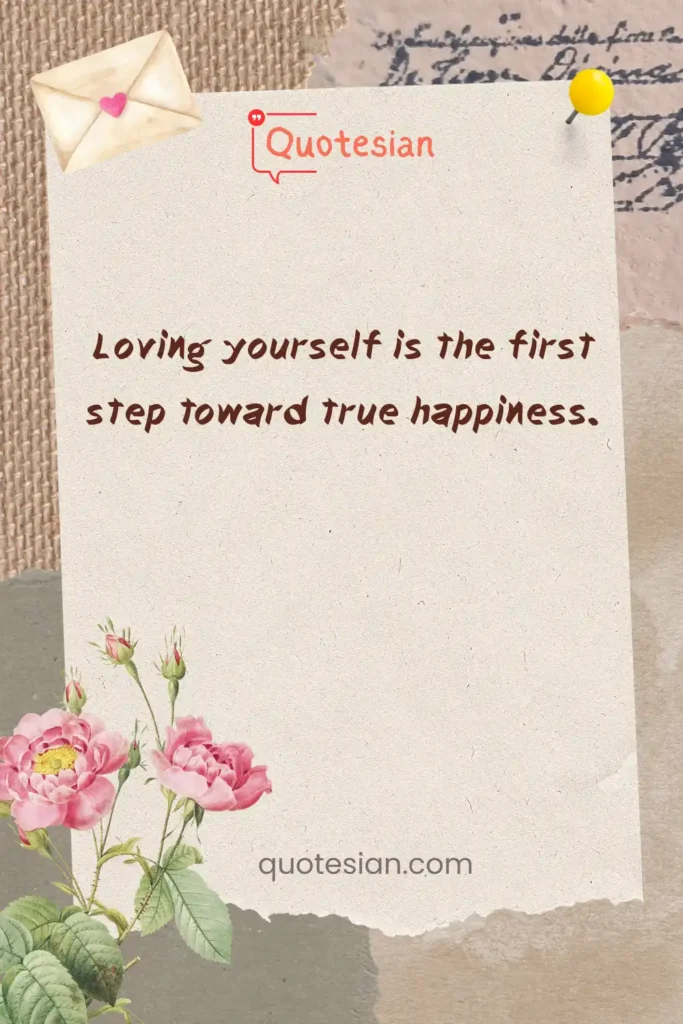
Loving yourself is the first step toward true happiness.
This line highlights the foundation of emotional well-being. True happiness is difficult to sustain if it depends entirely on external circumstances or validation. When you value yourself, you create stability that does not shift with every challenge or opinion.
Loving yourself means accepting who you are while still allowing room for growth. It involves recognizing your strengths, forgiving your mistakes, and setting boundaries that protect your peace. Without self-respect, even success or praise can feel incomplete.
Self-love also shapes how you experience relationships and opportunities. When you believe you are worthy, you are more likely to pursue goals aligned with your values and surround yourself with supportive people. Confidence and clarity grow from that inner acceptance.
Ultimately, this message reminds us that happiness begins within. While life will always have ups and downs, a strong sense of self-worth provides resilience. By learning to appreciate and care for yourself, you build the emotional foundation needed to experience lasting joy and fulfillment.
You deserve your own compassion before anyone else’s.
This line emphasizes the importance of directing kindness inward before seeking it externally. Many people are quick to offer understanding and patience to others, yet hesitate to extend the same grace to themselves. True emotional balance begins when you recognize that your struggles and imperfections also deserve compassion.
Offering yourself compassion means responding to mistakes with reflection instead of harsh criticism. It involves acknowledging pain without minimizing it and allowing yourself space to heal. When you treat yourself with understanding, you build resilience and self-respect.
Relying solely on others for compassion can create imbalance. External support is valuable, but it cannot replace internal care. When you learn to comfort and encourage yourself, you strengthen your independence and emotional stability.
Ultimately, this message reminds you that self-compassion is not selfish. It is necessary. Before seeking validation or understanding from the world, give yourself the empathy you freely offer others. By doing so, you create a foundation of self-worth that supports healthier relationships and deeper fulfillment.
Love yourself loudly and unapologetically.
This line is a call to embrace your worth without hesitation or shame. Loving yourself “loudly” suggests confidence—allowing your strengths, growth, and individuality to be visible rather than hidden. It encourages you to take up space, express your voice, and celebrate who you are.
“Unapologetically” adds depth. It challenges the tendency to downplay achievements or feel guilty for prioritizing personal well-being. Self-love is not arrogance or selfishness. It is self-respect. When you stop apologizing for valuing yourself, you begin to live more authentically.
This message also speaks to courage. Choosing self-acceptance may require resisting comparison, criticism, or societal expectations. It means honoring your boundaries, pursuing your goals, and standing firm in your values without seeking constant approval.
Ultimately, this sentiment promotes empowerment. Loving yourself openly creates inner stability and confidence. When you embrace your identity with pride and clarity, you set a standard for how others treat you and how you navigate the world—with strength, dignity, and assurance.
You are whole, even when you feel incomplete.
This line speaks to the difference between feeling and truth. There are moments in life when you may feel uncertain, lost, or lacking. Emotions can create the impression that something is missing. Yet feeling incomplete does not mean you are broken or insufficient.
Wholeness is not about having everything figured out. It is about recognizing that your value does not disappear during difficult seasons. Growth, healing, and self-discovery often happen in phases where clarity feels distant. Those moments are part of being human, not proof of inadequacy.
This message also encourages patience with yourself. It reminds you that your worth is not dependent on achievements, relationships, or constant confidence. Even in times of doubt, you remain complete as a person—with experiences, strengths, and potential already within you.
Ultimately, this sentiment offers reassurance. Temporary feelings of emptiness or uncertainty do not define your identity. You are not waiting to become whole—you already are. What may be unfolding is understanding, not worth.
Speak to yourself as gently as you would a friend.
This line highlights the importance of mindful self-talk. Many people naturally offer patience, understanding, and encouragement to their friends, yet speak to themselves with harshness and criticism. The message invites you to extend the same compassion inward.
When a friend makes a mistake, you likely remind them that errors are part of growth. You reassure them of their strengths and offer support during setbacks. Applying that same tone to yourself builds resilience rather than self-doubt. Gentle self-talk does not ignore accountability—it balances it with kindness.
Speaking gently to yourself also strengthens emotional health. It reduces unnecessary stress and creates space for learning instead of shame. Over time, compassionate self-dialogue shapes confidence and stability.
Ultimately, this message reminds you that the relationship you have with yourself is constant. The words you use internally matter. When you replace harsh criticism with patience and understanding, you create a foundation of self-respect that supports growth, clarity, and long-term well-being.
Confidence blooms from self-love’s soil.
This line uses the image of growth to explain where true confidence begins. Just as a flower cannot bloom without healthy soil, confidence cannot flourish without self-love beneath it. The foundation determines the strength of what grows above the surface.
Self-love creates stability. It teaches you to accept your imperfections, recognize your strengths, and respect your boundaries. When you value yourself internally, you no longer depend entirely on outside approval. That inner security becomes the root system that supports outward confidence.
Confidence built without self-love can feel fragile, easily shaken by criticism or comparison. But when it grows from self-respect and compassion, it becomes steady. It is not loud or forced—it is calm and assured.
Ultimately, this message reminds us that confidence is not something to fake or chase. It develops naturally when you nurture yourself with patience and acceptance. When self-love enriches the soil, confidence blooms in a way that feels authentic, resilient, and lasting.
Celebrate your worth, not just your wins.
This line shifts the focus from achievement to inherent value. Wins—accomplishments, promotions, milestones—are meaningful, but they are moments. Your worth, however, is constant. It does not rise and fall with success or failure.
Celebrating only your wins can create pressure to perform. It ties self-esteem to results and can make setbacks feel heavier than they need to be. When you celebrate your worth, you honor qualities like resilience, kindness, effort, and growth—traits that exist regardless of outcomes.
There is freedom in this perspective. You begin to see value in the journey, not just the destination. Progress, learning, and persistence become reasons to appreciate yourself, even if the final goal is still ahead.
Ultimately, this message reminds you that you are more than your achievements. Success can be celebrated, but it should not define your identity. By recognizing your worth beyond wins, you build a stable foundation of confidence that remains steady through every high and low.
Love yourself enough to set boundaries.
This line highlights the connection between self-respect and healthy limits. Setting boundaries is not about pushing people away; it is about protecting your energy, values, and well-being. When you love yourself, you recognize that your time and emotional capacity are not unlimited.
Boundaries create clarity in relationships. They communicate what feels acceptable and what does not. Without them, resentment and exhaustion can quietly build. Loving yourself enough to set boundaries means valuing your peace as much as you value harmony with others.
There is courage in this practice. Saying no, asking for space, or expressing discomfort can feel uncomfortable at first. Yet these actions strengthen mutual respect. Healthy relationships thrive when expectations are clear and needs are acknowledged.
Ultimately, this message reminds you that self-love is active, not passive. It involves making decisions that protect your well-being, even when they are difficult. By setting boundaries with confidence and calmness, you create space for relationships built on respect, balance, and genuine care.

You are not a work in progress—you are a masterpiece.
This line challenges the idea that your worth depends on constant improvement. Calling yourself a “work in progress” can sometimes imply that you are unfinished or lacking. While growth is part of life, it does not mean you are incomplete or unworthy in the present.
Describing yourself as a “masterpiece” shifts the focus to inherent value. A masterpiece is not flawless; it carries texture, depth, and individuality. What makes it meaningful is its uniqueness. In the same way, your experiences, strengths, and imperfections contribute to who you are.
There is empowerment in this perspective. You can continue learning and evolving without viewing yourself as a project that needs fixing. Growth becomes an enhancement, not a requirement for worthiness.
Ultimately, this message reminds you that you do not need to wait for perfection to appreciate yourself. You are already whole, layered, and valuable. Improvement can be part of your journey, but it does not define your identity. You are not simply becoming something—you already are something meaningful and complete.
Choose to love yourself every single morning.
This line highlights the power of intention at the start of each day. Loving yourself is not a one-time decision; it is a daily practice. Each morning offers a fresh opportunity to approach yourself with patience, respect, and kindness.
Choosing self-love in the morning sets the tone for how you move through the day. It may look like speaking positively to yourself, honoring your boundaries, or beginning with gratitude rather than criticism. Small choices shape mindset, and mindset influences actions.
There is strength in making this a conscious habit. Some days will feel easier than others. Doubt or fatigue may challenge your confidence. Yet returning to self-love each morning builds resilience and stability over time.
Ultimately, this message reminds you that self-respect is cultivated through consistency. By choosing to value yourself at the start of each day, you reinforce your worth and create a foundation of clarity and confidence. Loving yourself becomes less about perfection and more about steady commitment.

Self-acceptance is the purest form of love.
Let your self-love be louder than your doubts.
Loving yourself is a radical, healing act.
Fill your own cup first—it’s not selfish, it’s survival.
Say yes to yourself more often.
Be proud of how far you’ve come, even in silence.
You’re worthy of love without conditions.

Loving yourself makes space for endless growth.
Your heart deserves your own affection.

Let your love for yourself shape your world.

To love yourself is to trust yourself.
Celebrate who you are, not who others expect you to be.
Love yourself enough to walk away from what hurts.

You are never too much—you are exactly right.
Speak love into your own soul.

Make yourself your own safe space.
You are worth loving, especially on your worst days.
Fall in love with your own story.

Choose yourself, every time.
You are already enough to be loved.
Your value doesn’t shrink to fit others’ opinions.
Let your reflection feel like home.
Love yourself, not just when you succeed, but when you fail.
The love you give yourself will inspire others.
Self-love transforms pain into power.
Be gentle with yourself—you’re learning every day.
You deserve love without effort or achievement.

Your soul is beautiful—love it fiercely.

Choose self-love over self-doubt.
Honor your needs without guilt.

You are your own best source of love.

Love yourself into confidence and peace.
Every version of you deserves your love.

Celebrate your uniqueness—it’s your strength.
Let your heart feel safe in your own presence.
Loving yourself is a lifelong romance.
Forgive yourself as often as you breathe.
The best love story begins with loving yourself.