Some love stories don’t have happy endings. Lost love is one of the most painful experiences we face — it leaves us with memories, unanswered questions, and emotions we’re often too afraid to say aloud. It’s about missing someone deeply while learning to live without them.
But even though lost love hurts, it also shapes us. It teaches us what we want, what we need, and how deeply we’re capable of feeling. These quotes are for the hearts that have loved and lost — for those moments of quiet reflection, for nights when the memories are too loud, and for the slow journey of healing.
Whether you’re mourning a past relationship or simply reminiscing about what once was, these quotes will help you express what words sometimes can’t.
“I lost you, but I found myself in the process.”
This line reflects the bittersweet growth that can follow loss. Letting someone go is rarely easy, especially when emotions were deep and sincere. Yet sometimes, in the space left behind, there is clarity. The end of a relationship can create room for self-reflection, healing, and rediscovery.
Losing someone often forces you to confront parts of yourself that were overlooked. You begin to understand your needs, boundaries, strengths, and resilience. It can be painful, but it also becomes a turning point. What once felt like heartbreak slowly transforms into self-awareness and personal growth.
There is strength in this perspective. It does not deny the sadness of loss, but it recognizes that something valuable emerged from it. Growth does not erase the past, but it reshapes its meaning. Instead of defining you by what ended, it helps you understand who you are beyond that connection.
Ultimately, this message speaks to transformation. Sometimes relationships teach us lessons we could not learn any other way. In losing someone, you may discover independence, confidence, and a deeper understanding of yourself. What felt like an ending can quietly become a new beginning within.
“You can miss someone and not want them back.”
This line captures a mature and often difficult truth about moving on. Missing someone does not automatically mean you want to return to what once was. It simply acknowledges that they were once important, and the memories still hold emotional weight.
You can miss the moments, the laughter, the comfort, or the version of yourself that existed during that time. Nostalgia can surface without changing your understanding of why things ended. Growth sometimes means recognizing that something mattered, but also knowing it no longer fits your present life.
There is strength in this realization. It shows emotional clarity—the ability to separate feeling from decision. You can honor what was shared without reopening a chapter that has already closed. Missing someone does not erase the lessons learned or the boundaries you’ve built since then.
Ultimately, this message reflects acceptance. Love can leave traces, and memories do not disappear overnight. But moving forward means understanding that longing and wisdom can coexist. You can carry appreciation for the past while still choosing a different future for yourself.
“Some people leave, but their memories never do.”
This line reflects the lasting impact certain people have on our lives. Even when someone is no longer present, the moments shared with them often remain vivid. Memories hold emotions, lessons, laughter, and even the quiet spaces that once meant something. Physical distance or time does not erase those experiences.
When someone leaves, it can create an emptiness. Yet the memories they leave behind become a part of your personal history. They shape your perspective, influence your growth, and sometimes guide your future decisions. Certain conversations, places, or songs can bring those memories back instantly, reminding you of what once was.
There is both comfort and ache in this idea. Memories can warm the heart, but they can also highlight absence. Still, they serve as proof that the connection mattered. They show that the time shared had meaning, even if it did not last forever.
Ultimately, this message reminds us that relationships may end, but their impact often stays. People can walk out of your life, yet the imprint they leave behind continues quietly within you, carried in the stories and experiences that shaped who you are.
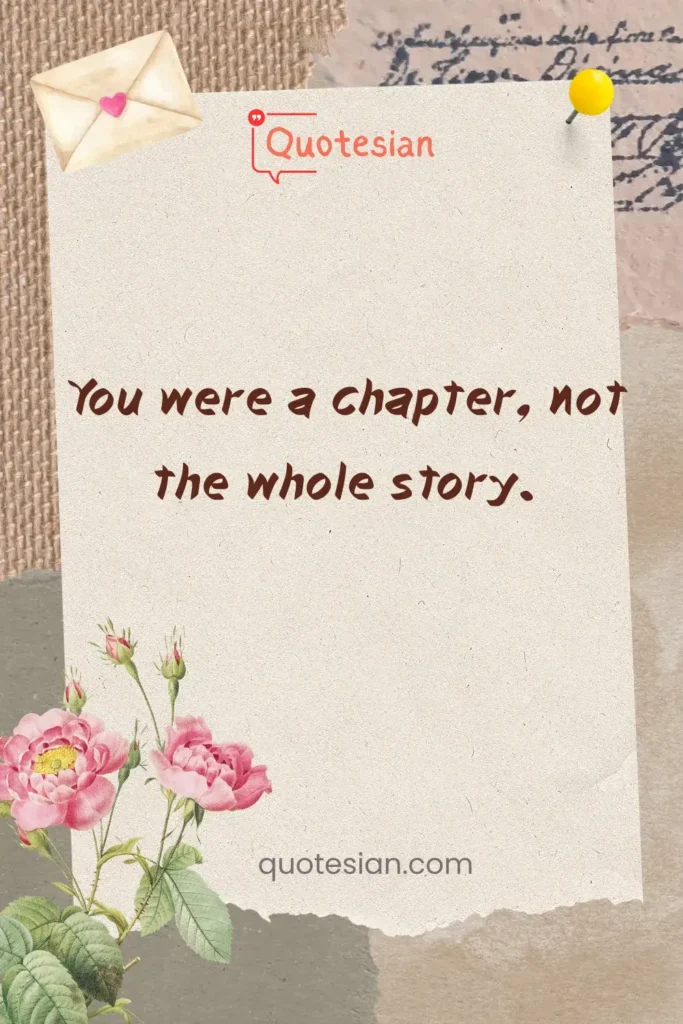
“The hardest part wasn’t losing you — it was losing who I was with you.”
This line reflects the deep identity shift that can follow the end of a relationship. Sometimes the pain is not only about the person who is gone, but about the version of yourself that existed alongside them. In love, we often become a slightly different version of who we are—more open, more hopeful, or shaped by shared routines and dreams.
Losing that dynamic can feel disorienting. The habits, inside jokes, future plans, and emotional patterns tied to the relationship suddenly disappear. It can leave a sense of emptiness, not just from missing someone, but from missing how you felt when you were with them.
There is honesty in acknowledging this. Relationships influence identity. They shape how we see ourselves and how we move through the world. When one ends, there is often a period of rediscovery—figuring out who you are independently again.
Ultimately, this message speaks to transformation. While it may be painful to lose that version of yourself, it also creates space for growth. The end of one chapter allows you to rebuild and redefine who you are on your own terms. Even though something was lost, something new can eventually take its place.
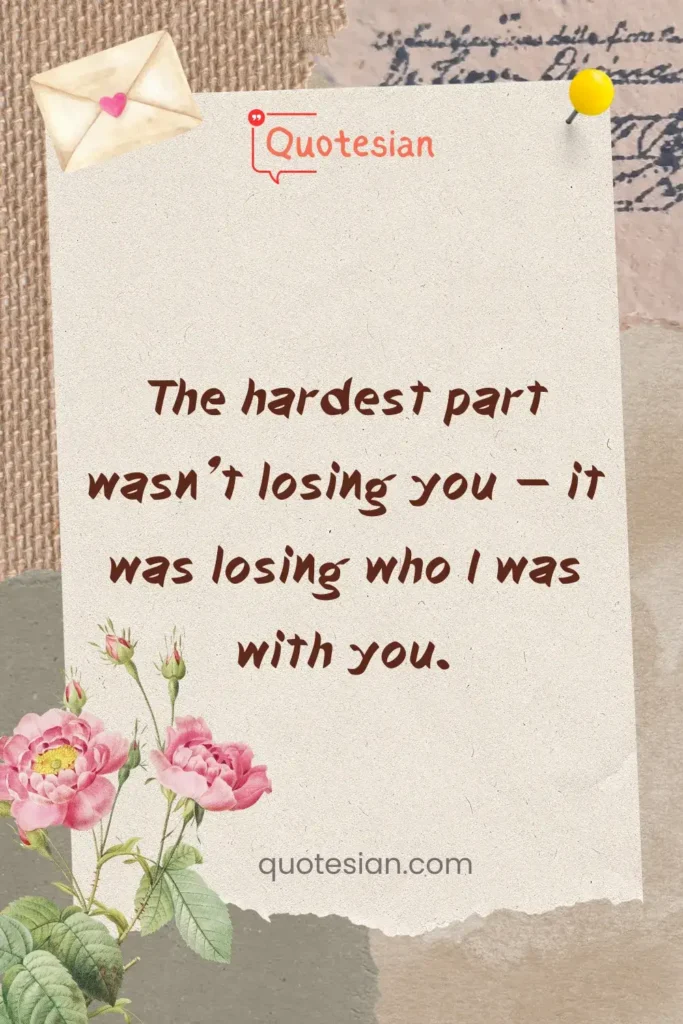
“You’ll always be my almost.”
This line captures the quiet ache of a connection that felt close to becoming something lasting but never fully did. An “almost” represents unfinished possibility—the relationship that nearly worked, the timing that was nearly right, the future that was nearly shared. It lingers because it hovered so close to becoming real.
There is something uniquely powerful about what almost was. Unlike clear endings, an “almost” leaves questions. It carries the weight of potential and imagination. You may find yourself wondering what might have happened under different circumstances. That uncertainty can make the memory feel even stronger.
At the same time, this sentiment reflects acceptance. It acknowledges that while the relationship mattered, it did not unfold the way you hoped. Calling someone “my almost” honors the connection without pretending it was more than it was.
Ultimately, this message speaks to the tenderness of unfinished stories. Some people do not become your forever, but they remain a meaningful chapter. An “almost” may not have lasted, but it leaves behind lessons, growth, and a reminder of how deeply you once felt.
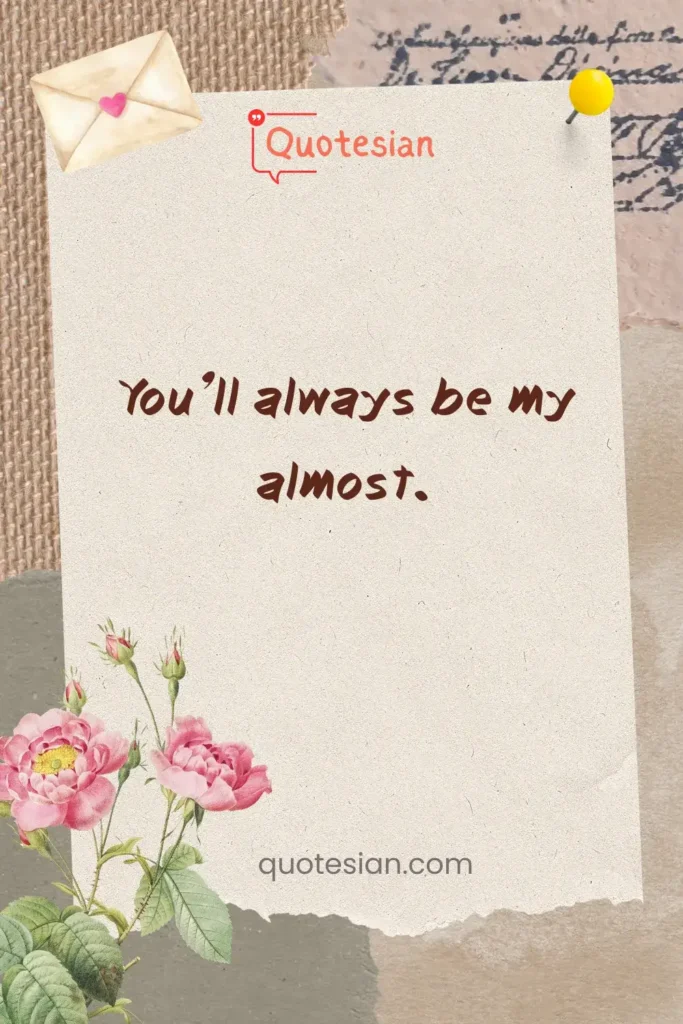
“Love doesn’t always stay, but it always leaves a mark.”
This line reflects the lasting impact of meaningful connection. Not every love story continues forever, but that does not make it insignificant. Even relationships that end can shape who we are and how we understand ourselves.
When love does not stay, it may bring disappointment or change. Yet it often leaves behind growth, awareness, and emotional depth. It can teach lessons about trust, communication, boundaries, and resilience. The experiences shared—both joyful and painful—become part of your personal history.
The “mark” mentioned here is not necessarily negative. It can be a reminder of vulnerability, courage, or transformation. Love has the power to shift perspectives and influence future choices. Even when it fades, it leaves something behind that cannot be undone.
Ultimately, this message reminds us that love is never meaningless, even if it is temporary. Some connections are not meant to last forever, but they still matter. The imprint they leave can guide you toward deeper understanding, stronger self-awareness, and more intentional relationships in the future.
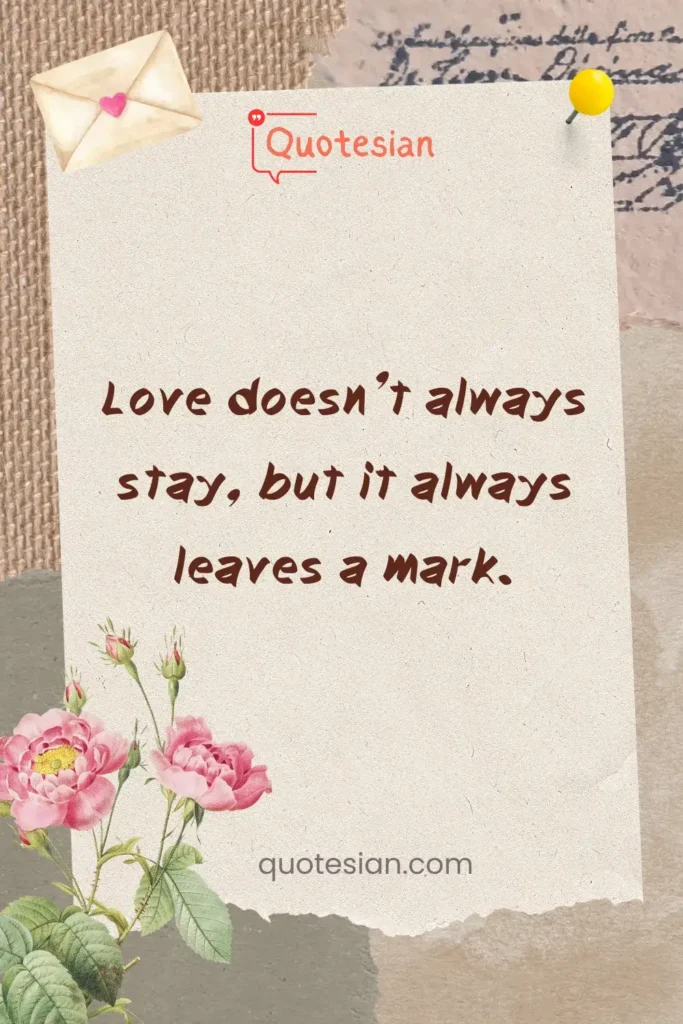
“You were a chapter, not the whole story.”
This line reflects perspective and growth after a meaningful relationship. Calling someone a “chapter” acknowledges that they played an important role in your life, but they were not meant to define it entirely. Just as a book moves through different sections, life unfolds through different experiences and connections.
A chapter can be powerful, emotional, and transformative. It can introduce lessons, memories, and changes that shape who you become. Yet it is only one part of a larger narrative. Recognizing this shows maturity—it honors what was shared without allowing it to overshadow the rest of your journey.
There is strength in understanding that your story continues. No single relationship, whether joyful or painful, determines your entire path. New experiences, growth, and opportunities still lie ahead. Life keeps turning pages, even after a meaningful chapter closes.
Ultimately, this message reminds us that people can matter deeply without being permanent. Some connections are meant to influence you, not complete you. They become part of your story, but the book is still being written, and there is much more to come.
“I didn’t lose you. I lost the version of me that loved you.”
This line reflects a powerful shift in perspective after a relationship ends. It suggests that the deepest loss was not the person alone, but the part of yourself that existed within that connection. When you love someone, you open parts of your heart, adjust your routines, and sometimes shape your identity around shared experiences. When it ends, that version of you can feel just as distant as they do.
There is maturity in recognizing this distinction. It shows awareness that relationships influence who we are at certain stages of life. The version of you that loved them carried specific hopes, habits, and emotional energy. Losing that version can feel like shedding a layer of yourself.
At the same time, this message hints at growth. People evolve. The person you were during that relationship may no longer align with who you are becoming. Letting go does not erase the past; it simply marks a transition.
Ultimately, this sentiment speaks to transformation. Sometimes what fades is not just the relationship, but the identity tied to it. In that space of loss, there is also room to rediscover and redefine who you are moving forward.
“We said goodbye, but my heart still whispers your name.”
This line captures the lingering presence of love after a farewell. Saying goodbye can bring closure in words, but emotions do not always follow as quickly. The heart often holds onto what the mind understands has ended. Even after separation, memories and feelings can resurface quietly and unexpectedly.
The idea of a heart “whispering” suggests something subtle and persistent. It is not loud or overwhelming, but gentle and continuous. Certain places, songs, or moments may trigger that quiet reminder of what once was. It reflects how deeply the connection once mattered.
There is tenderness in this sentiment. It does not necessarily mean regret or a desire to return. Instead, it acknowledges that some bonds leave an imprint that does not disappear overnight. Love, once felt deeply, can echo long after the chapter has closed.
Ultimately, this message speaks to the complexity of letting go. Goodbyes can end a relationship, but they do not instantly erase emotion. The heart may take longer to release what it once held so closely, carrying a soft reminder of someone who once meant everything.
“It hurts because it mattered.”
This line expresses a simple but powerful truth about pain and meaning. Hurt is often a reflection of significance. If something did not matter, it would not leave a mark when it ended. The depth of the pain reveals the depth of the connection that once existed.
When a relationship, friendship, or experience affects you deeply, it becomes part of your emotional world. Losing it creates an emptiness because it once filled a meaningful space. The ache is not weakness; it is evidence that you cared sincerely and invested your heart fully.
There is also a quiet dignity in this perspective. Instead of regretting the pain, it acknowledges its purpose. Feeling hurt does not diminish the value of what was shared. In many ways, it confirms that the experience was real and important.
Ultimately, this message reminds us that pain and meaning are often connected. Heartbreak is not just about loss; it is about the weight of something that truly mattered. The hurt may fade with time, but the significance of what once was remains part of your story.
“Some goodbyes are silent — felt, not spoken.”
This line captures the quiet endings that do not come with clear words or formal closure. Not every goodbye is expressed aloud. Sometimes distance grows slowly, conversations fade, or the connection changes without a final conversation. The separation is understood more through feeling than through speech.
Silent goodbyes can feel especially heavy because they leave space for unanswered questions. There may be no clear explanation or dramatic ending—just a gradual shift that signals something has changed. The absence of words does not make the goodbye any less real; in fact, it can make it more profound.
There is a subtle honesty in this message. It acknowledges that some relationships end not with conflict, but with quiet acceptance. The heart senses what the voice never says. Even without a final exchange, the emotional transition still takes place.
Ultimately, this sentiment reflects the complexity of human connection. Goodbyes are not always announced. Sometimes they are felt in silence, carried in small changes, and understood without needing to be spoken.
“Your memory is a song I can’t stop humming.”
This line beautifully captures how certain memories linger in the mind and heart. Comparing someone’s memory to a song suggests repetition, familiarity, and emotional resonance. Just like a melody that plays on loop, thoughts of that person return unexpectedly—sometimes softly, sometimes vividly.
A song you can’t stop humming is often tied to feeling. It might bring comfort, nostalgia, or even a gentle ache. In the same way, memories can surface in quiet moments, triggered by places, conversations, or simple reminders. They don’t always demand attention loudly, but they stay present in the background.
There is also intimacy in this comparison. Songs often hold personal meaning, connecting to specific times and emotions. When someone’s memory becomes like a melody, it suggests that they left a lasting impression—one that continues to echo within you.
Ultimately, this message reflects how certain connections become part of your emotional rhythm. Even when life moves forward, the memory plays softly in your heart. It may not dominate your thoughts, but it remains there—familiar, persistent, and impossible to fully forget.
“I still remember the way you made me feel — even when I don’t want to.”
“We let go, but I never stopped wondering ‘what if.’”
“You left, but your ghost still sleeps beside me.”
“I wasn’t ready to lose you — but maybe I was meant to.”
“Some love stories are meant to teach, not last.”
“Healing doesn’t mean forgetting.”
“Even lost love is still love.”
“You were once everything. Now you’re just a beautiful ache.”
“Letting you go didn’t end my love. It just changed its shape.”
“I lost you, but the memory of us lingers like perfume on skin.”

“We were a story that ended before it should’ve.”
“Your absence is the loudest presence in my life.”
“You were never mine to keep, only mine to love.”
“Some loves end without closure — only echoes.”
“I search for you in crowds, even though I know you’re gone.”
“We drifted apart, but a part of you still drifts in me.”
“Losing you hurt, but holding on would have hurt more.”
“Time didn’t erase you. It just taught me how to carry you quietly.”
“Our love didn’t fade. It froze in time.”
“I still carry conversations with the version of you I miss.”
“Some goodbyes happen without words.”
“I miss the us that never had a chance to be.”
“Loving you was a chapter. Losing you was the ending I didn’t want.”
“Even distance couldn’t take your name from my heart.”
“I didn’t lose you overnight. It happened slowly — like forgetting a song you loved.”
“You’re the lesson that still feels like a love story.”
“I mourn the love that lived between us.”
“Losing you was like losing the sun — the world kept moving, but it felt darker.”
“The hardest part of lost love is pretending you don’t miss them.”
“I never stopped caring. I just stopped showing it.”
“You were the one that taught me love — and loss.”
“Loving you wasn’t a mistake. Believing you’d stay was.”
“I can smile without you, but it never reaches my heart.”
“We said goodbye, but my heart never did.”
“Your absence is a chapter I keep re-reading in my mind.”
“I lost the person I loved and the person I was when I loved them.”
“You’re not coming back, but sometimes my heart still hopes you will.”
“Even lost love deserves to be remembered.”